Understanding Lunar Eclipses
Updated: Apr 26

Lunar eclipses happen when the moon moves through the shadow cast by the Earth. During a total eclipse the entire moon is darkened, but we see a faint reddish illumination. During either a partial or penumbral eclipse, the moon is only partially in the Earth's shadow. Lunar eclipses occur only about twice a year, and only when the moon is full. Let's look at the geometry and explain these facts.
Taking the Cat's Eye view
Professor Fzzbwungle, an astronomer living near the Cat's Eye Nebula, trains a telescope at our sun and records video for one Earth year. The video shows the Earth orbiting the sun once and the moon making 13.37 orbits around the Earth.
When the Earth is directly between the sun and moon, she reasons, the hemisphere of the moon facing Earth is fully illuminated, giving Earthlings a full moon. But then she asks herself, what about the Earth's shadow? She uses her AI tools to add that to the video:
She realizes that the proper alignment for a full moon is also the proper alignment for the moon to be in the middle of the Earth's shadow. She concludes that every full moon should be accompanied by a total lunar eclipse. We know that this is not true, so what is the professor overlooking?
The moon's tilted orbit
She overlooked that the orbit of the moon is tilted by 5 degrees from the Earth's orbit around the sun. Here's a picture showing four full moons.

The Earth's shadow completely misses the full moons on the left and right because the moon is nearly 21,000 miles respectively above and below the plane of the Earth's orbit. At the top and bottom are the points in time where the Earth's shadow points along the line of intersection between the Earth's and moon's orbital planes, known as the line of nodes. If a full moon exactly coincides with one of these times, we get a perfect eclipse, where the moon is precisely centered in the Earth's shadow. Depending on how far off the timing of the full moon is from this perfect coincidence, we get a full, partial, or penumbral eclipse.
Let's add a dashed line to Professor Fzzbwungle's video to show the line of nodes. Notice that, unlike in the figure above, the line of nodes does not stay in the same orientation, but gradually rotates clockwise, completing a full revolution in 18.6 years. This happens because the sun's gravitational pull on the moon causes the axis of the moon's orbit to gradually change direction in the same way as a spinning top that leans slightly.
Shadows
What creates the different categories of lunar eclipses? The shadow of the Earth has two regions. The umbra is where the Earth completely blocks any direct light rays from the sun. The penumbra is where the Earth partially blocks the sun.

A total eclipse occurs when the moon, at some point, is completely inside the umbra. At the peak of a partial eclipse, the moon partially overlaps the umbra. At the peak of a penumbral eclipse, the moon partially overlaps only the penumbra. Here's an illustration of these three categories of lunar eclipses.

Watching the sky on the midnight express
To get a sense of the moon's passage by or through the Earth's shadow, suppose we had a special aircraft that could fly to stay exactly on the opposite side of the Earth from the sun. If we lie down and look straight up, we're looking at the center of the umbra. Here's a video showing 5 years of watching the moon go by in its orbit. In most cases, there's an eclipse every 6th full moon, but sometimes an interval of 5 full moons occurs. In a few cases, there are two consecutive full moons with penumbral eclipses; the moon catches one side of the penumbra, and on the next orbit catches the other side.
Blood moon
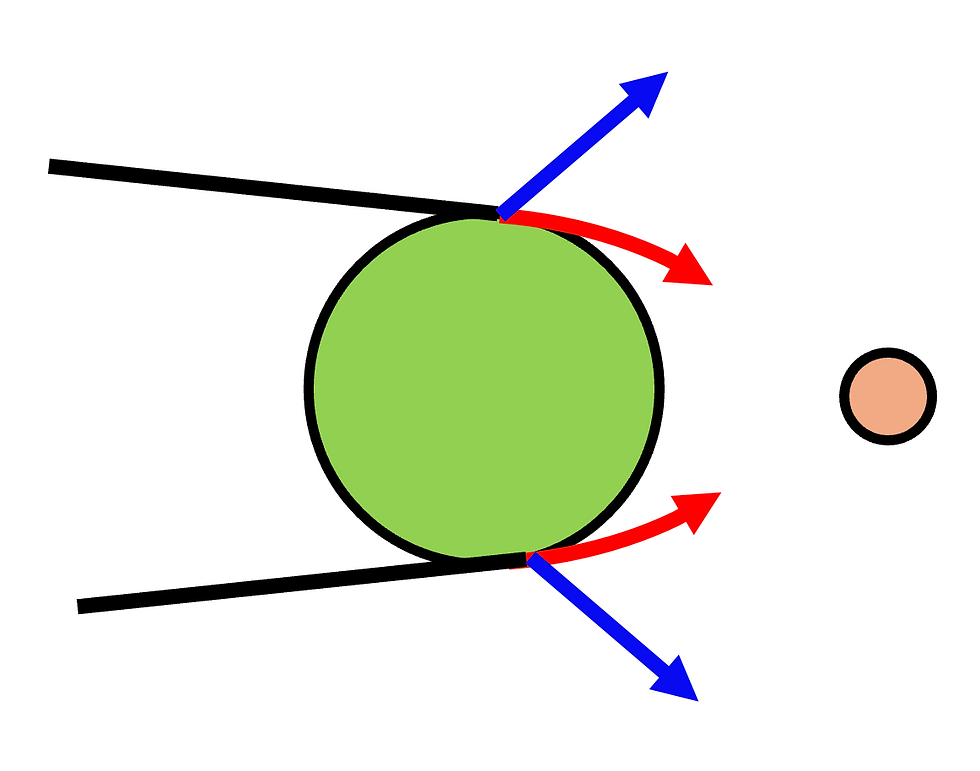
During a total lunar eclipse, some sunlight gets bent around the edge of the Earth by atmospheric refraction. The red light continues on to illuminate the moon whereas the blue light is more likely to be scattered aside by the atmosphere. This is the same effect discussed in my post on the color of the sky.
To learn more
Solar eclipses follow the same kind of analysis. A solar eclipse occurs during the new moon phase when the moon casts a shadow on the Earth. For science teachers, however, lunar eclipses make for good field trips because you can watch them without eye protection. Solar eclipses, on the other hand, require careful eye safety precautions. For a deeper dive into eclipses, I recommend this NASA web page.


The 'If You Are at a Similar Stage' note is criminally underrated — that was what convinced me to commit. Sinnova Consulting didn't just sell a service; they showed us a roadmap in that restructuring case narrative. For any mid-sized trader, it's a sober read.